
Fraud Analysis and Case Management. No Investigation Gaps.
Track incidents, assign ownership, and monitor resolution status with structured oversight and measurable control.
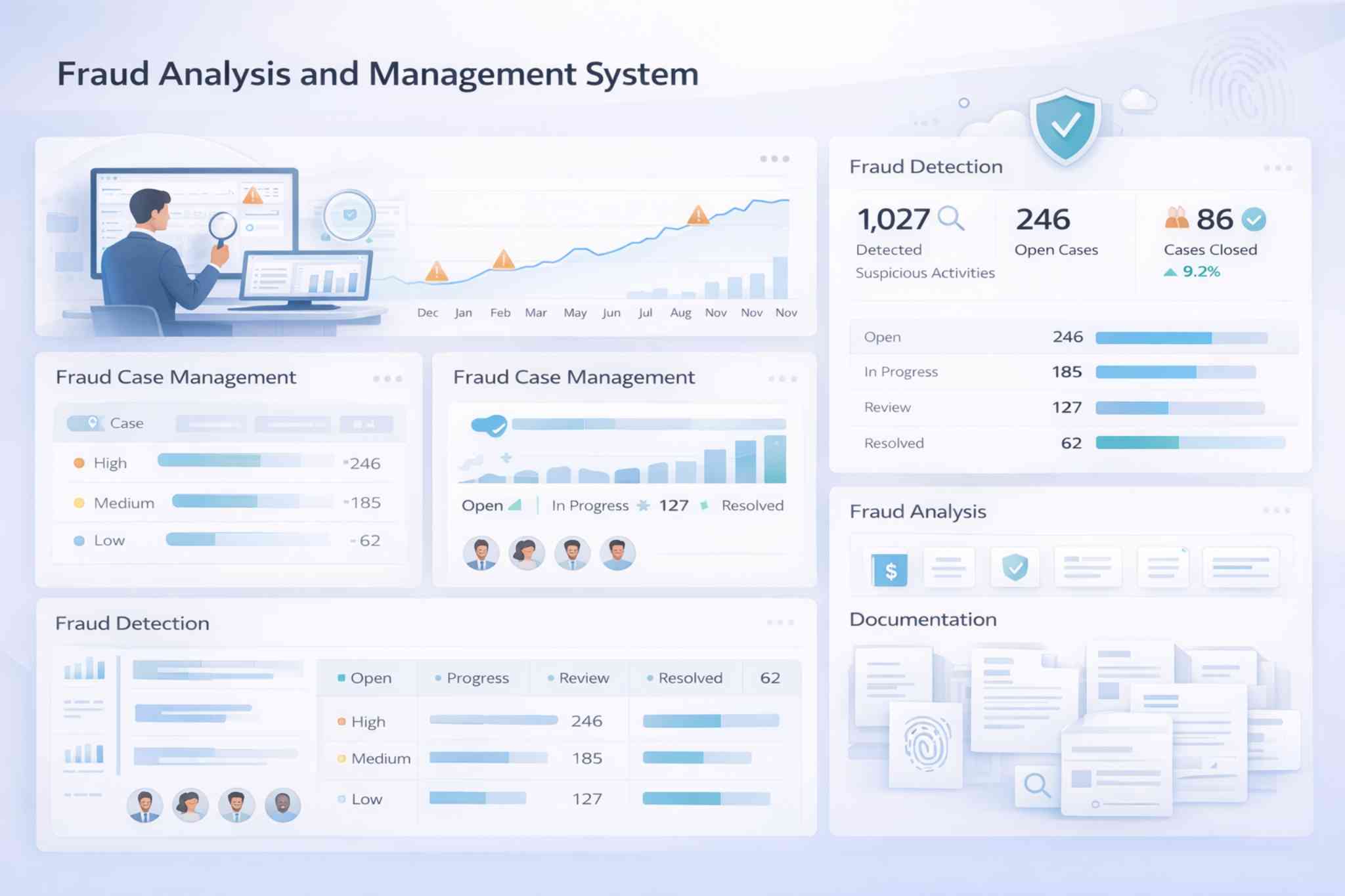
Centralize Fraud Case Management
Fraud case management software ensures every investigation is tracked from initial detection to final resolution. Every suspicious activity becomes a structured case with full documentation, accountability, and investigation workflows.

Automated Fraud Case Creation
Create fraud investigation cases automatically when suspicious activity or payment anomalies are detected across transactions or accounts.
Investigation Team Assignment
Assign fraud cases to investigators, compliance officers, or risk management teams with clear ownership and accountability.
Case Status and Priority Tracking
Track fraud case status, severity levels, and investigation priority so high-risk incidents receive immediate attention.
Evidence and Documentation Logs
Maintain detailed logs of evidence, investigation notes, and supporting documents for every fraud case.
Conduct Structured Fraud Analysis
Fraud investigations require structured review processes. Fraud analysis tools allow investigators to analyze suspicious activity across transactions, accounts, and behavioral patterns.
Transaction History Review
Analyze payment transactions and financial activity to identify anomalies or unusual behavioral patterns.
Payment Pattern Analysis
Identify irregular payment sequences, suspicious billing patterns, or unexpected changes in customer payment behavior.
Customer Activity Monitoring
Track related account activity across multiple transactions, invoices, or payment methods to detect coordinated fraud attempts.
Investigation Documentation
Document investigator findings, review notes, and case conclusions to maintain a defensible fraud investigation record.
Maintain Complete Fraud Documentation
Fraud investigations require comprehensive documentation. Every record, communication, and supporting document must remain accessible for investigation and compliance purposes.

Invoice and Payment Records
Attach invoices, payment receipts, and transaction data to fraud cases for complete financial traceability.

Communication Logs
Store communication records, internal messages, and external correspondence related to fraud investigations.
Authorization and Identity Data
Maintain authorization records, account verification details, and identity information linked to suspicious transactions.
Dispute and Chargeback History
Track previous disputes, chargebacks, and fraud-related activity to understand historical risk patterns.
Monitor Fraud Trends and Patterns
Beyond individual investigations, organizations must monitor systemic fraud patterns across operations, locations, and customer segments.
- Fraud case dashboards provide centralized visibility into investigation volumes and case status.
- Incident trend analysis identifies recurring fraud activity across time periods and departments.
- Risk categorization reports highlight high-risk accounts, payment methods, or operational segments.
- Department-level exposure tracking reveals which business areas experience the highest fraud activity.
Coordinate Cross-Department Fraud Response
Fraud investigations often involve multiple operational teams. Structured collaboration ensures investigations move quickly and accurately.
- Finance and Accounting Collaboration
- Operations and Risk Management Coordination
- Automated Fraud Case Escalation
- Role-Based Access to Investigation Records
- Chargeback and Payment Dispute Tracking
- Compliance and Audit Oversight
- Structured Investigation Approval Workflows
- Linked Customer Account Monitoring
- Multi-Department Incident Reviews
- Centralized Fraud Resolution Coordination
Built Directly Into Salesforce
Because the fraud management system operates natively on Salesforce, investigations connect directly to operational data, financial transactions, and customer records.
CRM Account Integration
Fraud cases connect directly to Salesforce account records for full customer activity visibility.
Transaction Record Linking
Payment transactions and invoices automatically link to fraud investigations for detailed analysis.
Real-Time Fraud Dashboards
Dashboards update instantly as cases progress, providing leadership visibility into investigation activity.
Audit Trail Tracking
Every fraud case action is logged with timestamps and user activity to support audit compliance.
AI-Powered Fraud Intelligence
As fraud data grows, machine learning models improve detection, prediction, and prevention strategies.
AI-Driven Fraud Detection
Fraud prevention becomes smarter with continuous behavioral analysis.
Fraud Pattern Detection
Identify recurring fraud schemes by analyzing historical transaction behavior and investigation outcomes.
High-Risk Account Prediction
Predict accounts that are more likely to experience fraud based on behavioral signals.
Coordinated Fraud Detection
Detect networks of related fraudulent transactions across multiple accounts or payment methods.
Investigation Optimization
AI highlights investigation bottlenecks and recommends improvements to fraud prevention strategies.